MBHC
Moringa Leaf Powder Organic 1 lb
Moringa Leaf Powder Organic 1 lb
Low stock: 3 left
Couldn't load pickup availability
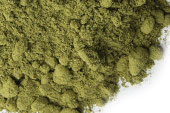
Nicknamed “the wonder tree”, moringa is considered a utilitarian tree providing building materials, food, and wellness supporting properties. Native to India, the tree has been introduced to many countries worldwide where it thrives in semi-arid climates. Moringa powder is milled from Moringa oleifera leaves. Moringa leaf powder can be incorporated into culinary dishes, added to smoothies, or blended into juices.
Moringa is a tree that has been used for thousands of years in India for everything from food, to building materials, and also for its beneficial properties. This 'wonder tree' truly is wondrous in that each part of the tree is useful. The roots, stems, leaves, seed pods, resin and flowers are considered to be healing herbs in Ayurvedic (traditional Indian healing system) and Unani (traditional Middle Eastern healing system) folk medicine. In modern times, the leaves and seed pods are utilized extensively due to their nutrient content and modern studies are investigating their vast potential. Other common names include drumsticktree, West Indian ben, muringa (Tamil), jacinto (Spanish), sahijan or munaga (Hindi), and shigru or shobhanjana (Ayurvedic).
Moringa is native to the sub Himalayan mountain region particularly in India and has been introduced to southwest Asia, southwest and northeast Africa, Madagascar, the Philippines, and in the United States in California, Arizona, Hawaii and Florida. This tree is in the Moringaceae, or horseradish tree, family which is closely related to the papaya containing Caricaceae family. It is the sole genus, containing thirteen species one such species being M. stenopetala, a species native to and cultivated in Africa.
The generic name is derived from the Tamil (language spoken in southern India and northeast Sri Lanka) word 'murungai' meaning twisted pod. And 'oleifera' is Latin meaning 'oil-bearing' due to the seeds high oil content.
Moringa is drought tolerant and thrives in semi-arid, tropical, and subtropical climates and is one of the most commonly cultivated food plants in the world. It is grown in India, Pakistan, Africa, the Philippines, and the Caribbean. Further, it is cultivated in various countries in Central and South America because it is easy to grow and has high market potential, therefore potentially providing an alternative to deforestation. It is also cultivated extensively in African countries to feed their own malnourished populations.
It is believed that the moringa tree originated in northern India and was being used in Indian medicine around 5,000 years ago, and there are also accounts of it being utilized by the ancient Greeks, Romans, and Egyptians. This tree was, and still is, considered a panacea, and is referred to as the 'The Wonder Tree', 'The Divine Tree', and 'The Miracle Tree' amongst many others. Moringa was used extensively in Ayurveda, where virtually all parts were considered useful with a plethora of beneficial attributes. It was employed to support digestion, spleen and eye health, as a cooking additive, and in many other ways. Its taste was considered bitter and pungent.
The whole tree has been used for erosion control and for building materials to provide shelter. The seed is high in oil, and the fibers remaining after oil extraction are one of the best plant-derived flocculants (clarifying agents) for clarifying water. Further, the roots are believed to taste like horseradish and are thus used as a condiment. Additionally, the flowers are eaten in omelets. The leaves have an extremely high nutrient value and are dried and powdered and put in sauces and baby formula. A beverage is made from the leaf, either as a standard tea or as a type of reconstituted dried leaf juice. In India, the immature seed pods (known as drumsticks) are eaten like asparagus. Further, a nutrient dense formula made from the leaves is sprayed on plants in South America in order to boost corn yields.….it is considered one of the most nutritious vegetables in the world.
Precaution
No known precautions. We recommend that you consult with a qualified healthcare practitioner before using herbal products, particularly if you are pregnant, nursing, or on any medications.
This information has not been evaluated by the Food and Drug Administration. This product is not intended to diagnose, treat, cure, or prevent any disease. For educational purposes only.
Share